Maria Nash
European Research Council (ERC) National Delegate and ERC National Contact Point for both the Physical Sciences & Engineering and Life Sciences domains.
ERC awards €11.4m in funding to seven Ireland-based rising stars and two Concept to Innovation projects for groundbreaking research as the 2025 ERC Work Programme is adopted

ERC 2024 Starting Grant awardees, Top L-R: Dr Konugolu Venkata Sekar (UCC), Dr Michael John Dolan (TCD), Dr Junli Xu (UCD), Dr Johanna Vos (TCD), Dr Imran Sulaiman (RCSI), Dr David McManus (UCD), Dr Catalina Vallejo-Giraldo (University of Galway)
ERC 2024 Proof of Concept awardees, Bottom L-R: Prof Pádraig Cantillon-Murphy (UCC), Prof Eoin Casey (UCD)
Seven Ireland-based researchers have been today announced among the ERC laureate grouping of 2024, having successfully competed in Europe’s most competitive and prestigious research call for individual early-career researchers. These newly announced ERC scholars are based across University College Dublin (UCD, 2), Trinity College Dublin (TCD, 2), University College Cork (UCC, 1), University of Galway (1) and the Royal College of Surgeons in Ireland, University of Medicine and Health Sciences (RCSI,1).
Exclusively directed toward early-career researchers, the European Research Council (ERC) Starting Call recognises and rewards the best of early-career research talent across Europe to pursue innovative, curiosity-driven and often surprising research. Responding to the ERC call, successful applicants have proposed solutions to address global challenges that are deemed outstanding through a rigorous two-step, peer-reviewed adjudication process. Once awarded, these ERC Starting grants support this exploratory and extraordinary research through a maximum duration of five years and an average €1.5 million budget.
This announcement follows the recent success of two Ireland-based researchers (from UCC and UCD) in the first round of the 2024 ERC Proof of Concept (PoC) competition. PoC grants are available only to researchers who currently hold or have previously been awarded an ERC frontier grant and are specifically aimed at helping them translate their fundamental research into socially or commercially viable innovations.
Speaking today, Dr Maria Nash, ERC National Delegate and National Contact Point based at Research Ireland, said:
"Congratulations to all seven of our emerging scientists and our Proof-of-concept awardees and their host institutions on these outstanding achievements. In the first case, it is wonderful to witness young researchers being rewarded for trusting their instincts and insights in the formulation of ideas that will impact on our tomorrow. In the second, it is equally encouraging to follow the journey from pioneering concepts to their potential for innovation.
"These rewards reflect the exceptional standard of research talent in Ireland and as we approach the final three years of the Horizon Europe funding programme, I strongly encourage more researchers to compete in upcoming ERC calls across all career stages.
"A special note of appreciation goes to the research office teams, who work tirelessly behind the scenes to support applicants in securing ERC grants."
Details on the nine awards, starting with the frontier grants, and reactions of the successful Principal Investigators (PIs) are given below.
*************************

Dr David MacManus, Assistant Professor, School of Mechanical & Materials Engineering, UCD has been awarded for the project brainsex.
Women are underrepresented in traumatic brain injury (TBI) research despite reporting worse symptoms, and having longer recovery periods with prolonged symptom durations compared to men. The key idea of brainsex is that TBI biomechanics are sex specific due to the multiscale sex specific neuroanatomy, causing damage to the brain, its blood vessels, and cells under lower impact forces in women compared to men. brainsex will develop new computer models of the male and female brain to predict the severity of damage to the brain, its blood vessels, and cells during head impacts. These new models will deliver a breakthrough in our understanding of TBI biomechanics with the potential for impact across the domains of prevention, diagnosis, and treatment of TBI.
Responding to news of the award, Dr McManus said: I am honoured to have been awarded an ERC Starting Grant for my project ‘Bridging the sex gap in traumatic brain injury biomechanics’. This funding will support five years of transdisciplinary research into understanding the effect of sex specific neuroanatomy on traumatic brain injury biomechanics. I am very grateful to all of my collaborators, friends, and past and current members of BRAIN Lab for their inspiration and motivation over the years that has contributed to this success. I am particularly grateful to my colleagues in UCD Research and the UCD School of Mechanical & Materials Engineering for their continued support throughout. I would also like to thank Enterprise Ireland for their support through the EI Horizon Europe ERC Support grant. I am excited to begin this new research project and see what discoveries await.
*************************

Dr Johanna Vos is, Assistant Professor, in the School of Physics at TCD was awarded for the project proposal Exo-PEA.
Over the past 30 years, astronomers have uncovered thousands of orbiting stars other than our sun, which vary from small, rocky worlds, to giant planets like Jupiter. Additionally, a large number of isolated worlds have been discovered that do not orbit a host star. We have already learned that the atmospheres of these strange worlds are highly complex, hosting a range of weather processes. The launch of the James Webb Space Telescope (JWST) enables a new era in our understanding of extrasolar atmospheres. By providing observations of unprecedented quality, this ground-breaking facility opens a new window into these atmospheres. Exo-PEA will combine new data from JWST with state of the art computational and data-driven techniques to reveal the dominant atmospheric processes that drive weather on giant planets beyond our solar system.
Reflecting on being awarded the ERC Starting grant, Dr Vos commented: “I am delighted to have been awarded the ERC Starting Grant, Exo-PEA. The overarching goal of my research is to provide a comprehensive understanding of weather on worlds beyond our solar system, and this award provides a unique opportunity to make use of data from cutting-edge facilities such as the James Webb Space Telescope to achieve this goal. I look forward to building a diverse team of researchers over the coming years to significantly improve our understanding of extrasolar atmospheres.”
*************************

Dr Junli Xu, Assistant Professor at the School of Biosystems and Food Engineering at UCD, was successful through the PlasTox proposal.
Tiny plastic particles, known as micro- and nanoplastics (MNPs), are everywhere—in the air we breathe, the water we drink, and the food we eat—exposing humans to these tiny particles daily. The project seeks to understand how tiny plastic particles might affect human digestive health. By using advanced techniques such as machine learning and spectral imaging, the project aims to develop new models that can predict the health impacts of MNPs, potentially transforming how we assess the risks of these tiny plastic particles and reducing the need for costly lab experiments. The significance of this work lies in its potential to revolutionise our approach to toxicology, environmental safety, and public health by offering more accurate and efficient ways to assess the risks associated with MNP exposure.
Reacting to the good news, Dr Xu said: “I am thrilled and deeply grateful to be awarded an ERC Starting Grant. PlasTox provides me with the opportunity to explore highly ambitious and innovative research ideas that are both transformative and impactful, expanding beyond microplastic research into other areas of toxicology. Attaining competencies in the microplastic domain involves environmental science, life science, analytical chemistry, mathematics and data analytics to make substantial progress and anchor this field of research as a standalone activity. The ERC Starting grant would therefore be the optimal solution for such evolution, allowing for the acquisition of essential instruments and the expansion of my research team.”
*************************

Prof Imran Sulaiman, Respiratory Consultant at Beaumont Hospital and Researcher in the RCSI Clinical Research Centre (RCSI CRC) was successful through the e-MOCA proposal.
The e-MOCA (Early Multi-Omic Cancer Assessment) project aims to develop novel bio-markers and a first of its kind risk-probability model based on multi-omic data to predict diagnosis, prognosis, and response to treatment in lung cancer, with a particular focus on lung squamous cell cancer (LUSC). New predictive biomarkers for lung cancer will lead to a reduction in un-necessary invasive diagnostic procedures, earlier diagnosis, and ultimately improved patient outcomes. The project will utilise novel sequencing methods such as metagenomics, metatranscriptomics and host transcriptomics in combination with metabolomics to fully evaluate the functional role of the lung microbiome in the development and prognosis of lung cancer.
In response to becoming an ERC Laureate Prof Sulaiman commented: “I am beyond thrilled and grateful to the ERC for providing me with this incredible opportunity to investigate the role of the lung microbiome in lung cancer. With this support I’ll be able to put together and lead a team of researchers while transitioning into an independent investigator in Ireland. This funding will also provide me with the time necessary to focus my research interests in better understanding the mechanisms of microbial-host interactions while setting up the infrastructure for further research projects.”
*************************

Dr Michael-John Dolan, Assistant Professor of Genetics at TCD and Investigator at FutureNero Research Centre for Chronic and Rare Neurological Diseases, was awarded through the successful MicroDissect proposal.
Dr Dolan’s research will focus on microglia, the brain's resident immune cells, which can form distinct subtypes, or “states” – especially during brain damage, disease, or repair. While microglia are crucial for regulating neuroinflammation and brain repair, these states are poorly understood at present.
To understand the biology of these states, this project will develop new molecular and genomic tools to map these microglial states in a model of brain repair with the ultimate goal of harnessing microglial states to rejuvenate and arrest neuropathology. As microglia have been implicated in many neurological and neurodevelopmental disorders including Alzheimer’s disease and Multiple Sclerosis, the datasets, tools and insights will be broadly applicable to the study of brain disorders.
On learning that he had been awarded the Starting grant, Dr Dolan explained: “I am honoured to have been awarded an ERC Starting Grant. Having just moved back to Ireland to start my lab, this will provide an unparalleled opportunity to expand my research in a new direction and tackle an important but understudied question in neurobiology.”
*************************
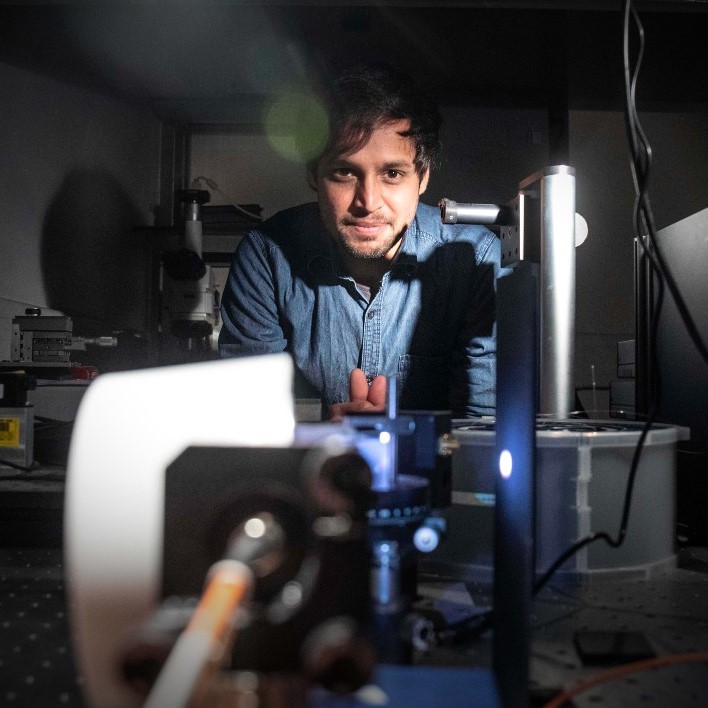
Dr. Konugolu Venkata Sekar is the team leader of Integrated Fast Biophotonics at the SFI-funded Irish Photonics Integration Centre (IPIC) at Tyndall National Institute, UCC; his ERC-funded project, NOBIAS, aims to create a new paradigm for bias-free sensing in healthcare devices.
Skin colour bias in optical biomarker sensing devices, such as pulse oximeters, affects 2.2 billion people of colour worldwide. Dr. Konugolu’s project, NOBIAS, seeks to develop a revolutionary Time Domain Diffuse Optical Spectroscopy (TDDOS) method to eliminate colour bias and inaccuracies in these critical devices. This pioneering technology will address the urgent need for more accurate and equitable medical diagnostics by focusing on the influence of skin pigmentation, variations in skin layer thickness, and composition across different ethnicities. The project leverages recent advancements in LIDAR technology and Dr. Konugolu’s decade-long experience in time domain technology to create a foundational platform that addresses color bias, reduces the effects of motion artifacts, and improves accuracy in existing technologies.
Speaking about this work, Dr. Konugolu explains: "The new paradigm I will achieve in NOBIAS will lay the foundation for the world’s first bias-free and accurate optical biomarker sensing device, and our aim is for its legacy to become the gold standard for bias-free clinical and personal biomarker sensing. The success of the project will usher in a new era of accurate optical biomarker sensors for fitness monitors, smartwatches, and clinical bedside biophotonics devices."
*************************

Dr Catalina Vallejo Giraldo is an early career lecturer at the Department of Biomedical Engineering at the University of Galway and Investigator with the CÚRAM Research Centre for Medica Devices and is being funded to pursue the project TrapKill.
Available drugs are only partially effective, and they work by damaging cancer cell DNA in combination with radiotherapy. In response, cancer cells ramp-up DNA repair processes, rendering these treatments largely ineffective. The ERC funding through TrapKill will allow Dr Vallejo to focus on the development of a new cancer therapy using a soft gel that contains a cancer fighting drug and is patterned with narrow channels to encourage the entry of cancer cells. Mechanical deformation of the nucleus may transiently render cells highly susceptible to DNA damage and may represent a powerful adjunct approach for the treatment of brain tumours, where resistance to conventional DNA-targeting therapies is a significant contributor to therapy failure. Once inside, the cancer cells become trapped and compressed, disrupting their DNA repair mechanisms and rendering them susceptibility to damage. This approach will improve drug-radiation effectiveness and allow localised therapy of brain cancer.
Dr Vallejo commented on receiving the ERC grant funding: “This ERC funding affords get opportunity in terms of providing scope to pursue this ambitious and hopefully fruitful line of research, while also allowing for the training of PhD and postdoctoral researchers. I am exceptionally fortunate to have found great support from collaborators and mentors around the globe, as well as from the University of Galway, CÚRAM, the different research centres in the University, and my current Biomedical Engineering discipline.”
*************************

Prof Eoin Casey, Full Professor, School of Chemical and Bioprocess Engineering at UCD and PI at the BiOrbic Research Centre was awarded a PoC grant for AMADEUS which aims to build on the work achieved through his 2021 ERC Advanced grant ABSOLUTE.
A growing demand for clean water is driving the increased adoption of new technologies for the production of water via water-recycling and seawater-desalination. A problem with these technologies is that they use a lot of energy. This new ERC PoC project will use new developments in Green Chemistry to develop solutions that improve the energy efficiency of water treatment technologies. "
Reacting to being awarded ERC PoC funding Prof Casey said: “I have always been interested in translating our laboratory research to real world application and this Proof of concept grant is a stepping stone to turning our research into a commercial proposition.”
*************************
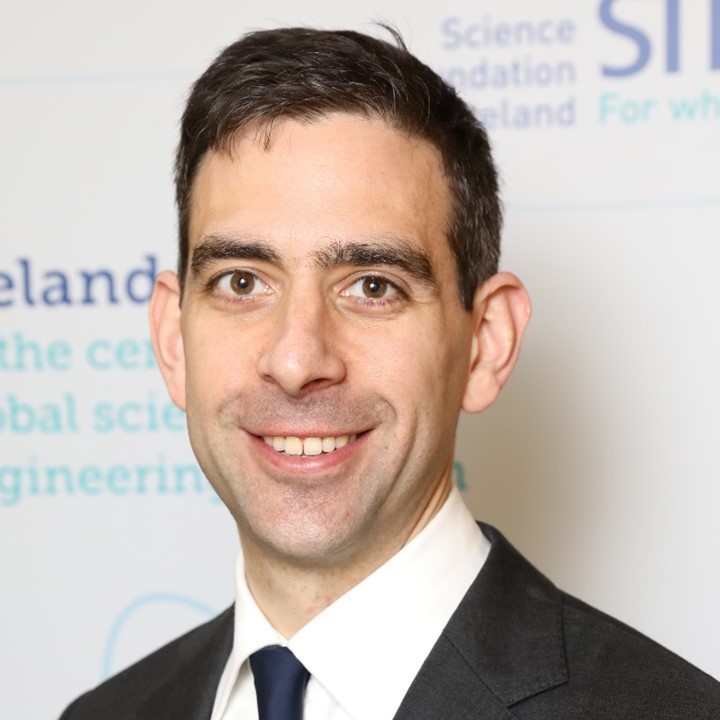
Prof Pádraig Cantillon-Murphy, Professor of Biomedical Engineering, Tyndall National Institute at University College Cork, Ireland, visiting faculty at IHU Strasbourg and CÚRAM Research Centre PI was awarded the PoC funding for the Saor Track proposal.
Magnetic tracking technology is the gold-standard for in vivo navigation where line-of-sight is not available. Magnetic tracking reduces dependence on radiation imaging and provides highly accurate tracking of instruments, tools and cameras inside the patient. However, existing commercial and research solutions are wired. High-accuracy wireless tracking can transform existing clinical applications of magnetic tracking such as electrophysiology (EP) mapping of the beating heart by dramatically reducing wire clutter in the OR, and simplifying the clinical workflow. More importantly, wireless tracking can open up new clinical applications where high-accuracy position navigation are not feasible to date, such as in capsule endoscopy. Existing capsules provide video feed to the clinical team without localisation to the patient’s anatomy.
Saor Track will use wireless position navigation design integrated with existing camera solutions to provide highly accurate localisation of abnormalities within the colon, resulting in more precise and faster diagnosis. This project builds on ground-breaking innovations from the ERC Deep Field project to demonstrate proof-of-concept pre-clinical validation for our wireless magnetic navigation design in high-value existing applications by demonstrating the feasibility of high-accuracy position navigation in capsule endoscopy for the first time.
Remarking on what the PoC award means for this research, Prof Cantillon said: "This work represents the culmination of 10 years of research in magnetic navigation at Tyndall and UCC. Gastrointestinal diseases such as colon cancer are placing significant burden on European healthcare systems as populations age. Using capsule endoscopy to diagnose and screen for these diseases could significantly reduce the burden on healthcare systems. However, the technology needs to improve to provide more specific and targeted data on the disease. This is where Saor Track can make a real difference."
*************************
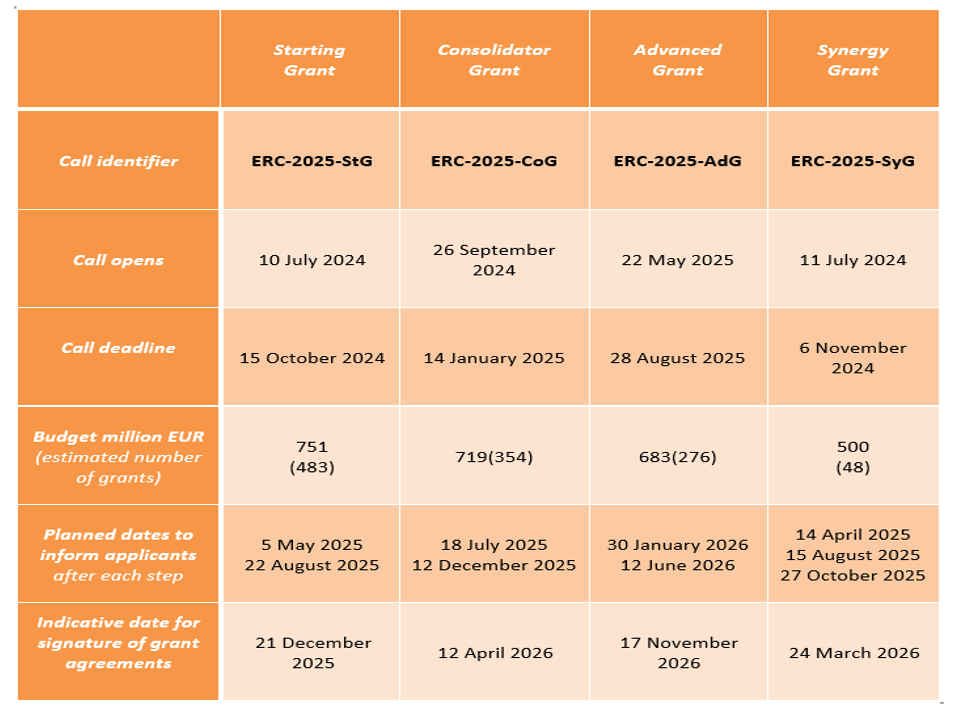
Finally, over the summer, the European Research Council approved, adopted and published its 2025 Work Programme, which lays out the upcoming funding opportunities, call budgets, and grant competition calendar; the Programme's first major milestone was the opening of the Starting Grant Call in early July.
One for your calendar - A Webinar on the details and novelties of the ERC Work Programme 2025 will take place on 12 September, 14.00 - 15.30 GMT, when Angela Liberatore and José Labastida from the ERC Executive Agency will present and answer questions from viewers.
Indicative summary of calls from the 2025 budget